The only compound that works on desire itself; not just blood flow
- Acts on the brain’s MC4R arousal circuit; the same pathway behind FDA-approved Vyleesi
- Effective for both men and women, including cases where Viagra and Cialis fall short
- Onset in 30–45 min. Effects last 4–8 hours. Dose-adjustable.
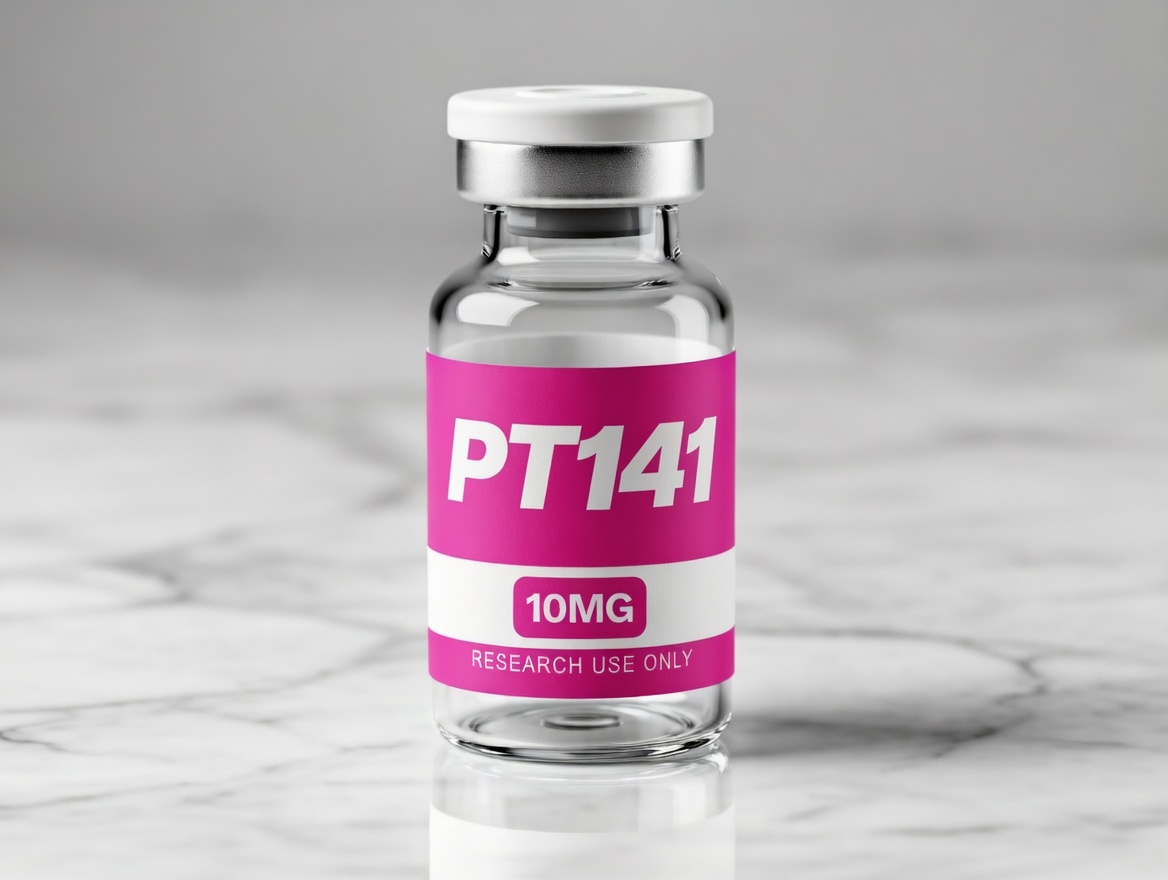
PT-141 was derived from Melanotan II after researchers noticed its dramatic arousal side effects and decided to isolate that pathway. The result was bremelanotide; a selective MC4 receptor agonist that works in the brain's hypothalamus and limbic system. Unlike Viagra and Cialis, which act on blood flow, PT-141 targets desire itself at the neural level. It was FDA-approved in 2019 as Vyleesi for female hypoactive sexual desire disorder; making it the only peptide with FDA approval for sexual function. The MC4R arousal pathway is present in both sexes, making PT-141 one of the few compounds effective for both men and women through the same mechanism.
PT-141 (Bremelanotide)
Original price was: ฿1,400.00.฿900.00Current price is: ฿900.00.
save 6–12% on orders of 3+ vialsA standard dose-response study (8–12 weeks, 3 cohorts) typically requires 3–5 vials. Order 3+ to activate tier pricing.
For research use only. Not for human or veterinary consumption. In-vitro laboratory use only.
Bank Transfer · BTC · ETH · USDC · USDT · SOL
Description
What It Does
- Central MC4R-mediated sexual desire and arousal research; brain, not blood flow
- Comparing central desire pathway vs peripheral blood flow (PDE5) mechanisms
- Female sexual dysfunction; same validated pathway as FDA-approved Vyleesi
- Male sexual function in psychogenic and hormonal cases where PDE5 inhibitors fail
- Dose-response and receptor selectivity studies for melanocortin agonists
How to Reconstitute
Allow the vial to equilibrate to room temperature before opening. Reconstitute in bacteriostatic water to your required working concentration. Do not vortex; gently swirl until the powder is fully dissolved. Filter through a 0.22 μm membrane if sterile conditions are needed for cell work. Aliquot into single-use volumes immediately after reconstitution to avoid freeze-thaw cycling.
Storage
Store lyophilized vials at −20°C in the original sealed container, protected from moisture and light. Lyophilized material stays stable for up to 24 months when stored correctly. Reconstituted solutions should be stored at −80°C and used within 30 days. Avoid repeated freeze-thaw cycles.
What’s Included
- 1 × PT-141 lyophilized vial ; 10mg
- Batch number and expiry date printed on vial label
- Discreet external packaging with no product name or branding on the exterior