
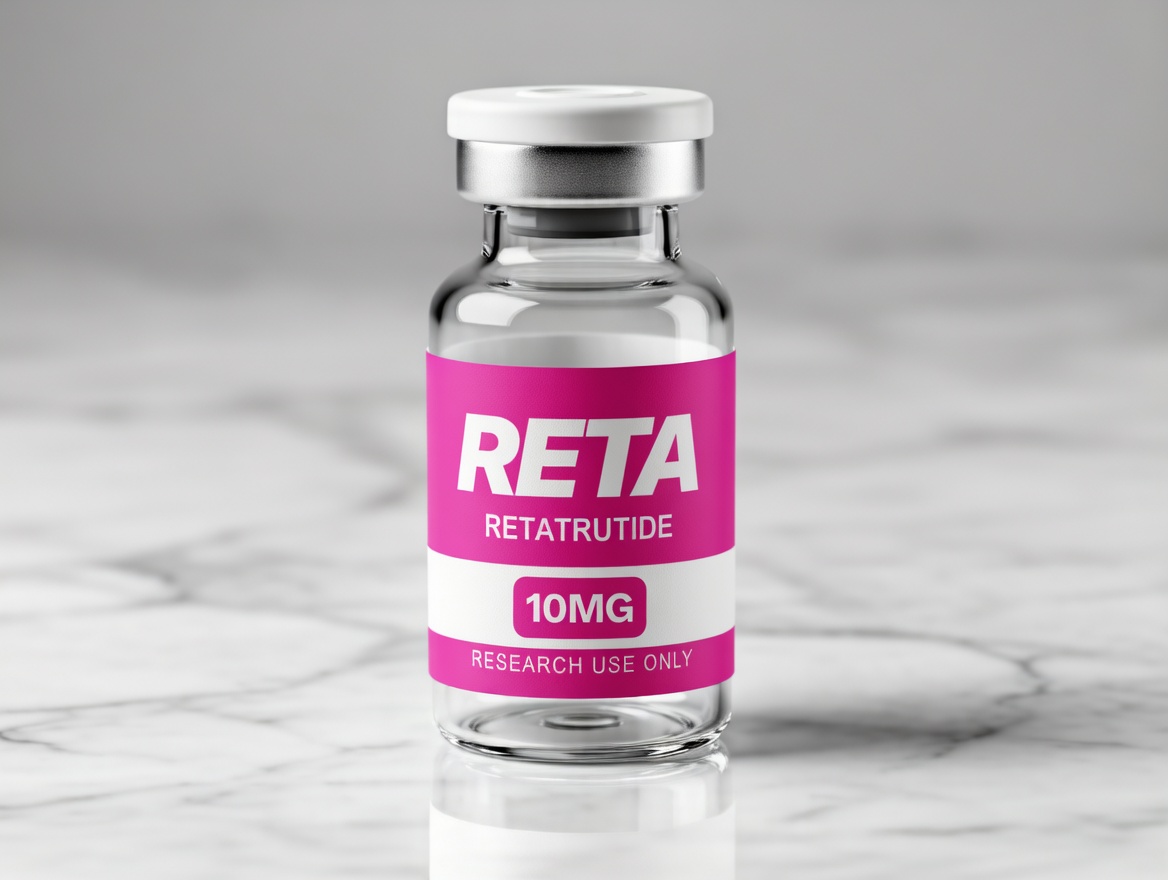
Retatrutide 10mg
฿2,600.00
- Mechanism: Triple agonist — simultaneous GIP / GLP-1 / Glucagon receptor activation (LY3437943)
- Format: 10mg lyophilized powder per vial — ships from Thailand within 24h of payment
- Included: Independent CoA (HPLC + mass spectrum) · Batch number · Discreet packaging
For research use only. Not for human or veterinary consumption. In-vitro laboratory use only.
Description
Product Specifications
| Peptide | Retatrutide |
|---|---|
| Also known as | LY3437943 • RETA |
| CAS Number | 2381272-15-5 |
| Molecular Weight | 4,559.3 Da |
| Quantity per vial | 10mg |
| Format | Lyophilized powder (white to off-white) |
| Purity | >99% by HPLC |
| Peptide content | ≥90% net peptide (adjusted for water and counter-ions) |
| Verification method | External HPLC chromatography + mass spectrometry |
| Certificate of Analysis | Provided digitally with every shipment |
| Reconstitution | Sterile water for injection or 0.1% acetic acid |
| Storage — lyophilized | −20°C, sealed vial, away from moisture and light |
| Storage — in solution | −80°C; use within 30 days; avoid freeze-thaw cycles |
| Shelf life | 24 months from manufacture date (lyophilized, correct storage) |
| Intended use | In-vitro laboratory research only. Not for human or veterinary use. |
Research Background
Retatrutide (LY3437943) is a synthetic 39-amino acid peptide and simultaneous agonist at three metabolically relevant receptors: the glucose-dependent insulinotropic polypeptide receptor (GIP-R), the glucagon-like peptide-1 receptor (GLP-1R), and the glucagon receptor (GCGR). This triple-agonist profile sets it apart from dual agonists such as tirzepatide and single-target GLP-1R agonists such as semaglutide.
Phase 2 clinical data published in the New England Journal of Medicine (2023) showed mean body weight reductions of up to 24.2% at 48 weeks in adults with obesity, among the highest reported for any drug in this class. The glucagon receptor arm contributes independently to hepatic glucose output, energy expenditure, and lipid metabolism, making it a distinct research target beyond incretin biology.
Research Applications
- Triple incretin receptor co-activation studies (GIP-R / GLP-1R / GCGR simultaneous signaling)
- Comparative receptor binding affinity and downstream signaling potency vs. mono- and dual-agonist peptides
- Hepatic glucose output suppression and lipid metabolism in in-vitro liver cell models
- Adipose tissue lipolysis and energy expenditure pathway characterization
- cAMP-dependent signaling cascade modeling and second-messenger quantification
- Pancreatic beta-cell insulin secretion and glucose-stimulated insulin response studies
- Appetite and satiety neuropeptide signaling pathway investigation
Reconstitution Protocol
Allow the vial to equilibrate to room temperature before opening. Reconstitute in sterile water for injection or 0.1% acetic acid at the working concentration required by your assay. Do not vortex; gently swirl or invert the vial until fully dissolved. Filter through a 0.22 μm sterile membrane if sterility is required for cell-based assays. Aliquot reconstituted stock into single-use volumes to eliminate freeze-thaw cycling.
Storage and Stability
Store lyophilized vials at −20°C in the original sealed container. Protect from moisture and prolonged UV exposure. Under recommended conditions, lyophilized material stays stable for up to 24 months from the manufacture date recorded on the Certificate of Analysis. Reconstituted peptide solutions should be stored at −80°C and used within 30 days. Avoid repeated freeze-thaw cycles, which degrade the peptide over time.
What’s Included
- 1 × Retatrutide lyophilized vial — 10mg
- Independent Certificate of Analysis (HPLC chromatogram + mass spectrum + batch data)
- Batch number and expiry date printed on vial label
- Discreet external packaging with no product name or branding on the exterior
Leave a Comment